Ἡ θεραπεία τῶν δέκα λεπρῶν (Λουκ. ιζ, 12-19)
Εἰς τὸ ὄνομα τοῦ Πατρὸς καὶ τοῦ Υἱοῦ καὶ τοῦ Ἁγίου Πνεύματος
Τὸ Εὐαγγέλιο -ὁλόκληρο τὸ Εὐαγγέλιο εἶναι δῶρο τοῦ Θεοῦ σ’ ἐμᾶς, καὶ ἂν καὶ δὲν θυμόμαστε συνεχῶς τὴν ἀνάγκη μας νὰ εἴμαστε εὐγνώμονες, πῶς μποροῦμε νὰ ἀνταποκριθοῦμε μὲ εὐγνωμοσύνη στὶς δωρεὲς τοῦ Εὐαγγελίου στὴν ζωή μας; Ὁ Θεὸς τόσο ἀγάπησε τὸν κόσμο ὥστε πρόσφερε τὸν μονογενῆ Του Υἱὸ γιὰ νὰ τὸν σώσει· καὶ ὁ Υἱὸς πρόσφερε ἐλεύθερα τὸν ἑαυτό Του σ’ ἐμᾶς μέσα ἀπὸ τὴν κυρίαρχη ἐλευθερία τῆς Θεότητάς Του· κανεὶς δὲν ἔχει ἀφαιρέσει ἀπὸ Ἐκεῖνον τὴ ζωὴ- αὐτὰ εἶναι τὰ λόγια Του· πρόσφερε τὴ ζωή Του, ἐλεύθερα, πρόθυμα γιὰ νὰ ζήσουμε ἐμεῖς.
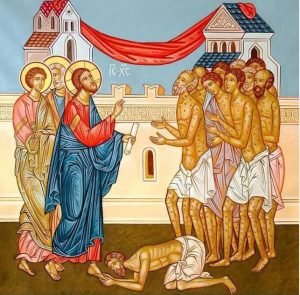
Καὶ σήμερα στὸ Εὐαγγέλιο μᾶς παρουσιάζεται ἕνα μικρὸ παράδειγμα τοῦ τρόπου, ποὺ τὶς περισσότερες φορὲς, δεχόμαστε τὰ δῶρα τοῦ Θεοῦ. Δέκα ἄνδρες ἦλθαν στὸν Κύριο, μὲ καλυμμένο τὸ σῶμα τους ἀπὸ λέπρα, καταδικασμένοι σ’ ἕνα σκληρὸ θάνατο, ἀλλὰ ποὺ εἶχαν ἐπίσης ἀπορριφθεῖ, σύμφωνα μὲ τὸ τυπικό τῆς κοινωνίας, ἀπὸ τοὺς δικούς τους ἀνθρώπους, ἐξαιτίας αὐτῆς τῆς μολυσματικῆς ἀσθένειας. Ἦλθαν πρὸς Αὐτόν, στάθηκαν σὲ ἀπόσταση, ἐπειδὴ γνώριζαν ὅτι σύμφωνα μὲ τὸν Ἑβραϊκὸ Νόμο δὲν εἶχαν κανένα δικαίωμα νὰ ἔλθουν κοντά Του, νὰ τὸν ἀκουμπήσουν. Καὶ ζήτησαν ἔλεος. Καὶ ὁ Θεὸς τοὺς ἔστειλε στοὺς ἱερεῖς σὰν δεῖγμα εὐγνωμοσύνης γιὰ τὴν ἴαση τους· καὶ πίστεψαν στὰ λόγια Του καὶ πῆγαν, καὶ θεραπεύτηκαν πρὶν πραγματοποιήσουν τὸν σκοπό τους. Θὰ περιμέναμε νὰ τρέξουν πίσω, νὰ πέσουν στὰ πόδια τοῦ Χριστοῦ, νὰ τὸν ἀγγίξουν σὲ ἔνδειξη εὐγνωμοσύνης- ὄχι… Κανείς τους δὲν ἐπέστρεψε· τοὺς ἦταν ἀρκετὸ ποὺ θεραπεύτηκαν: αὐτὸ ἦταν ποὺ ἤθελαν ἀπὸ τὸν Θεό. Ὡστόσο, ἕνας ἀπὸ αὐτούς, ἐπέστρεψε καὶ ἦλθε νὰ εὐχαριστήσει τὸν Κύριο.
Τούτη ἡ παραβολὴ δὲν εἶναι μία εἰκόνα γιὰ τὸν τρόπο ποὺ συχνὰ φερόμαστε; Προσευχόμαστε· ζητᾶμε ἀπὸ τὸν Κύριο κάτι ποὺ μᾶς ἐνδιαφέρει: μπορεῖ νὰ μὴν εἶναι ζήτημα ζωῆς καὶ θανάτου, ἴσως, νὰ εἶναι ἁπλὰ κάτι ποὺ τόσο πολὺ χρειαζόμαστε· ἢ ποὺ δὲν χρειαζόμαστε τόσο πολύ, ἀλλὰ, ποὺ ἔχουμε τόση μεγάλη λαχτάρα γι’ αὐτό. Καὶ τότε μᾶς δίνεται αὐτὸ ποὺ ζητᾶμε· καὶ παίρνουμε τὸ δῶρο, καὶ ὁρμᾶμε στὴ ζωὴ μὲ τὸ δῶρο στὰ χέρια, ἐπειδὴ μᾶς εἶναι ἀρκετὸ ποὺ ἐκπληρώθηκε ἡ προσευχή μας. Πόσο σπάνια ἐπιστρέφουμε, ἀφήνοντας τὸ δῶρο μας στὴν ἄκρη, καὶ στρεφόμαστε στὸν Θεὸ γιὰ νὰ τοῦ ποῦμε:Τί θαῦμα! Ποιὰ εἶναι ἡ ἀγάπη Σου! Πόσο σπουδαῖα, πόσο σπλαχνικά, πόσο ταπεινὰ- ἀνταποκρίθηκες στὴν προσευχή μου.. Ἀπὸ τοὺς δέκα ἀνθρώπους ὁ ἕνας ἐπέστρεψε στὸν Κύριο Ἰησοῦ Χριστό: πόσοι ἀπὸ ἐμᾶς, στρέφονται ἀμέσως στὸν Θεὸ μ’ ἕνα χαμόγελο, ὅπως κάνει ἕνα παιδὶ καὶ λέει «Εὐχαριστῶ!», ἔστω καὶ μ’ ἕνα χαμόγελο, χωρὶς λόγια, πρὶν ἐπωφεληθεῖ ἀπὸ αὐτὸ ποὺ τοῦ δόθηκε. Καὶ χάνουμε τόσα πολλὰ, ὅταν δὲν εἴμαστε εὐγνώμονες· ἐπειδὴ, ἂν μάθουμε νὰ εἴμαστε εὐγνώμονες στὰ φανερὰ δῶρα τοῦ Θεοῦ, θὰ ἀνακαλύψουμε σταδιακὰ ὅτι μποροῦμε νὰ εἴμαστε εὐγνώμονες σὲ πολὺ περισσότερα, σὲ ὅλα τὰ πράγματα ποὺ ἡ Θεία Πρόνοια φέρνει στὸ δρόμο μας: ὄχι μόνο στὰ πράγματα ποὺ μᾶς χαροποιοῦν, στὰ θαύματα τῆς ζωῆς, ἀλλὰ ἀκόμα καὶ στὶς προκλήσεις τῆς ζωῆς, τὰ πράγματα ποὺ ἀπαιτοῦν ἀπὸ ἐμᾶς κουράγιο, μεγαλεῖο, εὐγένεια, τὰ πράγματα ποὺ φοβόμαστε. Καὶ πόσο συχνὰ θὰ μπορούσαμε νὰ ξεπεράσουμε τὴν ματαιοδοξία μας μὲ τὴν εὐγνωμοσύνη ποὺ θὰ νοιώθαμε! Ἐπειδὴ ματαιοδοξία σημαίνει νὰ κοιτάζουμε τὸν ἑαυτό μας καὶ νὰ σκεφτόμαστε: πόσο ὑπέροχοι εἴμαστε, ξεχνῶντας ὅτι αὐτὸ ποὺ εἴμαστε, ὅλα ὅσα ἔχουμε εἶναι δῶρα τοῦ Θεοῦ.
Ἂν μόνο, κάθε φορὰ ποὺ λέμε, ἤ κάνουμε τὸ σωστό, κάθε φορὰ ποὺ εἴμαστε ἄξιοι τῆς ποιότητας, τοῦ μεγαλείου καὶ τῆς εὐγένειας τοῦ ἀνθρώπου, καὶ ἐπίσης τοῦ ὀνόματος τῶν μαθητῶν τοῦ Χριστοῦ – ἂν κάθε στιγμὴ στρεφόμασταν στὸν Θεὸ καὶ Τοῦ λέγαμε, «Ναί! Πόσο ὑπέροχα εἶναι τὰ λόγια ποὺ εἶπα, πόσο καλὴ εἶναι ἡ πράξη ποὺ ἔκανα –καὶ τὰ πάντα ἦταν ἀπὸ Ἐσένα: Ἐσύ μοῦ ἔδωσες τὴν εὐκαιρία, Κύριε! Ἤμουν σὲ θέση νὰ ἀντιληφθῶ αὐτὴν τὴν ἀνάγκη, ἐπειδή, Ἐσύ, ψιθύρισες στὴν καρδιά μου: Κοίταξε!…Κατάλαβα, ἐπειδὴ ὁ νοῦς μου δἐχτηκε τὸν φωτισμὸ τοῦ Εὐαγγελίου! Ἡ καρδιά μου ἀνταποκρίθηκε ἐπειδὴ τὴν ἄγγιξες Ἐσύ, καὶ ἡ πέτρινη καρδιὰ ποὺ κουβαλῶ στὸ στῆθος τὶς περισσότερες φορές, γέμισε ἀπὸ συμπόνια καὶ κατανόηση! Καὶ μοῦ ἔδωσες τὰ μέσα γιὰ νὰ βλέπω τὴν ἀνάγκη, καὶ νὰ νοιώθω χαρὰ γι’ αὐτό. Ἂν θὰ μπορούσαμε νὰ ἀνταποκριθοῦμε μὲ αὐτὸν τὸν τρόπο στὸ κάθε τι, θὰ ἀνακαλύπταμε ὅτι ἡ ζωὴ εἶναι πράξη λατρείας καὶ εὐγνωμοσύνης.
Ἂς προβληματιστοῦμε, πλησιάζει ἡ ὥρα ποὺ ἡ καρδιά μας θὰ πρέπει νὰ φλέγεται ἀπὸ εὐγνωμοσύνη: ὁ Θεὸς μᾶς ἀγάπησε τόσο πολὺ, ὥστε νὰ γίνει ἕνας ἀπὸ ἐμᾶς· ἂν καὶ ἤμασταν ξένοι, συχνὰ ἐχθρικοὶ ἀπέναντί Του, ἦρθε καὶ ἔδωσε τὴ ζωή Του γιὰ νὰ ἔχουμε ζωή!…Πρέπει νὰ προετοιμαστοῦμε: ἡ χαρά, ἡ εὐγνωμοσύνη, ἡ πίστη, ἡ εἰλικρίνεια πρὸς τὸν Θεὸ, δὲν ἔρχονται ξαφνικά· πρέπει νὰ ἑτοιμαστοῦμε γι’ αὐτό. Ἂς στρέψουμε τὴν προσοχὴ μας σ’αὐτὸ ποὺ συνέβη πρὶν ἀπὸ 2000 χρόνια καὶ ποὺ σὲ λίγες ἑβδομάδες θὰ ξαναζήσουμε· καὶ νὰ ἑτοιμαστοῦμε, μὲ καρδιὰ καλλιεργημένη, βαθιὰ χαραγμένη ἀπὸ τὴν πίστη, ἔχοντας μελετήσει προσεχτικὰ ὅλη μας τὴ ζωή, νὰ δεχτοῦμε τὸν Κύριο στὴν καρδιά μας μὲ ἁπλότητα κι ἁγνότητα, ὅπως ἕνας βοσκός, ἢ σὰν τοὺς Σοφοὺς Μάγους μέσα ἀπὸ τὴν βαθιὰ κατανόηση ποὺ προσφέρει ἡ σοφία. Ἀμήν
Μετάφραση: serafeim.in
Πρωτότυπο Κείμενο
Healing of the Ten Lepers
23 December 1990
In the Name of the Father, the Son and the Holy Ghost.
The Gospel – all the Gospel is a gift of God to us, and although we are not continuously reminded of the need to be grateful, how can we not respond with gratitude to what the Gospel brings to us? God has so loved the world that He has given His only begotten Son that the world may be saved; and the Son has given Himself freely, in the sovereign freedom of His Divinity to us; no-one has taken His life from Him – these are His own words; He gave His life willingly, freely, that we may live.
And today we have in the Gospel a short example of the way in which we, most of the time, receive the gifts of God. Ten men came, covered with leprosy, condemned to a cruel death by illness, but also rejected ritually by their own people for the impurity of this infectious disease. They came to Him, stood at a distance, because they knew that according to the Jewish Law they had no right even to come near Him to touch Him. And they asked for mercy. And God send them to the priests to bring forth the sign of their gratitude for the healing which they had not received; and they believed, and they went, and they were healed before they reached their goal… We might have expected that they rushed back to fall to the feet of Christ, to touch Him in gratitude – no… Nine of them went their way; it was enough for them to have been healed: it’s all they needed of God. One of them, however, turned round, and came to thank the Lord.
Isn’t it an image of the way in which so often we also behave? We pray; we ask the Lord for something that matters to us: it may not be live and death, it may just be that we need so much, one thing or another; or that we don’t even need it so much, but that we long so much for it. And then it is given us; and we receive the gift, and we rush into life with this gift in our hearts, this gift in our hands, we rush to life because it is enough for us that our prayer was fulfilled. How seldom it is that we come back, leaving our gift to be used later, but first of all turning to God and saying: What wonder! What is Your love! How great, how compassionate, how humble – that You have responded to my prayer… One out of ten came back to the Lord Jesus Christ: how many of us have ever come immediately, before they took advantage of the gift, to turn to God with a smile, like a child turns and say \’Thank you!’, even with a smile, without words, before taking advantage of what is given. And we loose so much at not being grateful; because if we learned to be grateful for the obvious gifts of God, we would gradually discover that we can be grateful for a great deal more, for everything that Providence puts in our way: not only things we rejoice in, not only the wanders of life, but even the challenges of life, the things that claims from us courage, greatness, nobility, the things which we are afraid of. And how often we could overcome vanity by gratitude! Because vanity consists in looking at ourselves, and think: how wonderful we are, forgetting that all that we are, all that we have is a gift of God.
If we only, every time we have said the right thing, done the right thing, been worthy of our human quality, human greatness and nobility, and also of the name of the disciples of Christ – if every time we turned to God and said, ‘Yes! How wonderful are the words I have spoken, how good is the action I have performed – and everything was of You: the occasion was given by You, o Lord! I was able to perceive the need because You whispered in my heart: Look!… I could understand because I had my mind enlightened by the Gospel! My heart responded because You touched it, and from the heart of stone which I carry in my bosom most of the time it became a heart of flesh full of compassion and of understanding! And You gave me the means of meeting the need, and the joy of meeting this need!..
If we could respond to everything this way, we would discover that life is made into an act of worship and of gratitude.
Let us reflect on this because we are coming within a few weeks, a few days now to a day when our heart should be aflame with gratitude: God has loved us so much as to become one of us; while we were strangers, alien to Him, often inimical to Him, He came, and He gave His life for us that we may live!.. We must prepare for it: joy, gratitude, faith, openness to God does not happen of a sudden; we must prepare for it. Let us reflect on what is going to happen; the thing that happened nearly 2000 years ago that we shall remember as an actual event now, in a few weeks; and be ready, with a heart tilled, deeply furrowed by faith, by reflection, having thought out all our life, ready to receive the Lord like a shepherd, in the simplicity and purity of our hearts, or like the Wise Men in the deep understanding of wisdom. Amen!